
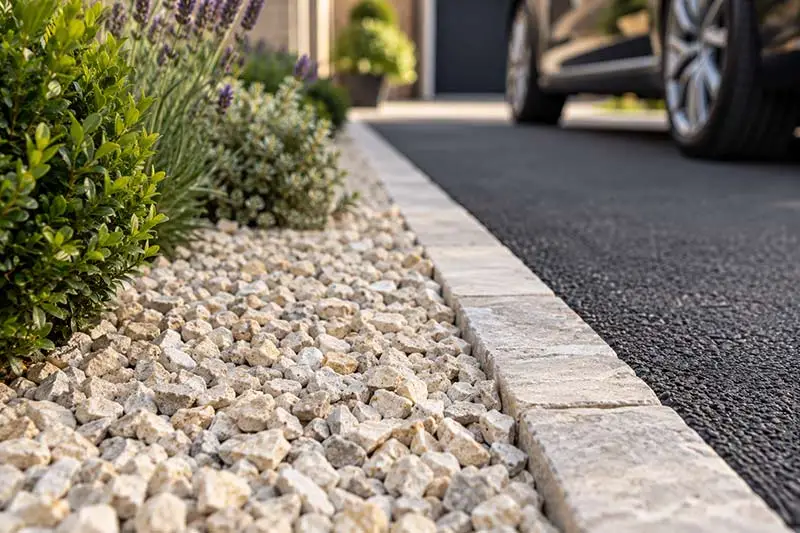
A well-designed limestone border can completely change the appearance of an outdoor space. Whether you are creating defined garden borders around a lawn, separating planting areas from a pathway, or improving the landscaping around commercial premises, limestone provides a natural, attractive and durable solution.
At Aggregate Superstore, we supply high-quality aggregates and landscaping materials for domestic, trade and commercial customers. For anyone looking for decorative aggregates, limestone is an especially versatile option. It can be used for a limestone garden border, limestone border edging, gravel paths, walkways, driveways and larger landscaping projects.
The natural appearance of limestone also means it works equally well in traditional British gardens and modern commercial outdoor spaces.
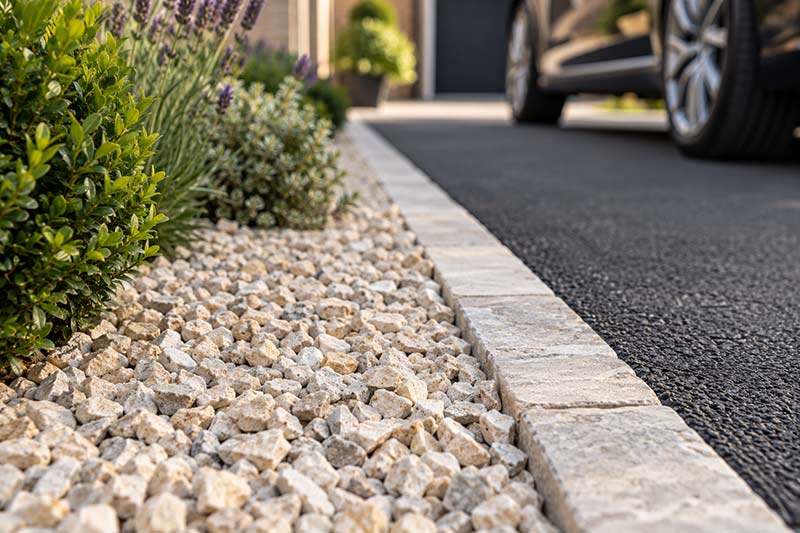
The term limestone border can describe several different landscaping features.
A border may be constructed from limestone setts, limestone cobbles, blocks or natural stone edging. Alternatively, crushed limestone and limestone gravel can be used to create a decorative strip between grass, a flower bed, paving or other landscaping materials.
This flexibility is one of limestone’s biggest advantages.
A formal garden might use straight edges and carefully positioned Garden Edging Stones to create clean lines. A country garden may look better with limestone cobbles or limestone gravel following a softer, curved layout.
Commercial landscaping may require something more substantial. Limestone border edging can help separate walkways, planting beds, car parks, driveways and building entrances while providing a smart finished appearance.
Limestone borders can be incorporated into almost any outdoor project.
Common applications include:
A limestone garden border can therefore perform both a practical and decorative role.
For example, limestone border edging around a planting bed creates a visible separation between soil and lawn. Around gravel paths, the edging can also help reduce the movement of loose aggregates into surrounding areas.
For businesses, defined borders can make outdoor areas appear better maintained and easier to navigate.
Garden edging is sometimes treated as a finishing detail, but it can have a surprisingly large influence on the overall aesthetic of an outdoor space.
Strong borders provide structure.
Without clearly defined borders, grass, gravel, paving and planting areas can visually merge into one another. A limestone border introduces separation while retaining the natural elegance associated with stone. There are several design approaches available.
Limestone setts can create a traditional British paving appearance. Limestone cobbles provide more variation and a slightly rustic appearance, while crushed limestone creates a softer transition between different garden environments.
Black limestone cobble setts can provide a particularly strong contrast against green grass or lighter paving slabs. Grey tones, such as those found in antique grey limestone or Tandur grey limestone cobbles, can produce a subtler effect.
The best option will depend on your garden style and surrounding materials.
Not every limestone garden border needs to be constructed from blocks or stones.
Decorative limestone aggregates can be used to create attractive borders around shrubs, flower beds and other planting areas.
The area should normally be excavated to a suitable depth before being prepared with the appropriate base or membrane for the intended application. A physical edge can then help prevent the limestone gravel from migrating onto the lawn or surrounding paving.
Using decorative aggregates in this way can provide an attractive option with relatively low ongoing maintenance. Natural variation in the stone creates visual interest that manufactured materials can struggle to reproduce.
Aggregate Superstore specialises in aggregates for landscaping and construction projects, making it easy to explore different materials for garden projects and commercial landscaping.
Path and walkway limestone gravel is another popular use for this versatile natural material.
A limestone path can provide an attractive connection between patios, garden buildings, entrances and different planting areas. In commercial environments, gravel may also be considered for suitable pedestrian landscaping areas where the specification allows.
Good Path Edging is particularly important.
Without suitable edging, loose limestone gravel can gradually spread into neighbouring grass or planting beds. Limestone border edging, concrete edging, metal restraints or other suitable edgings can help contain the material.
For paths exposed to heavy foot traffic, the complete construction matters. The correct sub-base, drainage, aggregate grading, depth and edge restraints should be selected for the expected use rather than choosing material purely for its appearance.
Limestone setts and limestone cobbles offer a more structural approach to border design.
Historically, natural stone has played an important role in British streets, courtyards and traditional landscaping. That heritage is one reason limestone setts continue to work particularly well around older properties and traditional British paving.
They are not limited to period designs.
Used alongside porcelain, contemporary paving slabs or modern planting, limestone cobbles can create an effective contrast between old and new materials.
A classic hand-cut finish or lightly textured face can increase the character of the stone. Hand-cut stone is naturally less uniform than precision manufactured concrete or porcelain, but that variation is often exactly what makes it attractive.
Colour, texture and dimensions should always be checked against the individual product specification.
Patio edging provides the transition between a paved area and the surrounding landscape.
A limestone border can create an attractive frame around sandstone paving, porcelain, Natural Stone Paving and some concrete surfaces.
Contrast can be particularly effective.
For example, dark limestone edging around lighter sandstone paving can create defined borders that emphasise the shape of the patio. Alternatively, choosing similar grey tones can produce a more understated transition.
The border should complement the paving rather than compete with it.
Think about the colour of the property, paving slabs, walls, fencing and planting before selecting the final stone.
Although limestone borders are often associated with domestic gardens, they can be equally useful for businesses.
Commercial outdoor spaces frequently need clear separation between pedestrian routes, planting areas, parking areas and building entrances.
Natural stone can soften the appearance of commercial landscaping, particularly around offices, hotels, restaurants, retail developments and visitor attractions.
For high-traffic areas, however, appearance cannot be the only consideration.
Traffic levels, accessibility, structural support, drainage and dependable slip performance all need to be considered. The correct construction should be specified by a competent landscaper, designer or contractor where necessary.
There are many alternatives to limestone edging, including concrete, brick, timber, metal and plastic. Each has advantages.
Concrete can be economical and is available in numerous shapes and finishes. Metal edging creates very thin, clean lines and works particularly well in contemporary gardens. Timber provides a warm, natural appearance and can be relatively easy to install.
Plastic edging can provide a low-cost solution, particularly where the edge is intended to remain relatively inconspicuous.
Limestone offers something different.
It is a natural material with individual variation in colour and texture. When installed correctly, it can provide a durable edge while becoming part of the overall landscape design rather than simply acting as a barrier.
That makes limestone border edging especially attractive where visual appeal and longevity are both important.
Before ordering materials, consider how the border will actually function.
Start by measuring the length of the proposed limestone border. You will then need to decide its width, depth and finished height.
Also consider:
Drainage deserves particular attention. Garden Edging Stones should not accidentally create areas where surface water becomes trapped. Similarly, paths, driveways and patios should be designed so that water is managed appropriately.
Correct planning at this stage can prevent much more expensive problems later.
Installation varies depending on whether you are using limestone setts, blocks, cobbles or decorative limestone gravel.
For solid edging, the proposed line is normally marked first. A trench is then excavated and an appropriate stable base prepared.
The limestone edging is positioned to the required line and level before being secured using a method suitable for the product and application. Straight edges can be checked using string lines, while curved garden borders require more careful positioning.
For structural paving applications, edge restraints can be particularly important because they help retain the adjoining construction.
Loose decorative limestone borders follow a different installation method. Once the ground has been prepared, an appropriate edging restraint can be installed before the decorative aggregates are spread evenly across the area.
The exact construction should always reflect ground conditions, loading and the selected materials.
One of the attractions of limestone is its relatively straightforward maintenance.
Loose limestone gravel may occasionally need raking or topping up, particularly around high-traffic areas. Weeds or organic debris may also need removing.
Solid limestone borders should periodically be checked for movement. Individual stones can shift if the base has not been prepared correctly or soil erosion occurs around the edge.
Natural stone can also weather and change appearance over time. This is part of the character of natural materials, although occasional cleaning may be desirable.
Avoid automatically using harsh acidic cleaners on limestone. Limestone is primarily calcium carbonate and can react with acids, potentially damaging or marking the surface.
Sustainability is increasingly important for both residential and commercial landscaping projects.
Limestone is a quarried natural material, so extraction, processing and transportation all have an environmental impact. These factors should be considered when comparing materials. Longevity also matters.
A durable border that remains in place for many years may reduce the need for repeated replacement. Accurate quantity calculations can reduce waste, while sensible delivery planning can improve the efficiency of larger projects.
Businesses may also want to consider locally appropriate materials and whole-life maintenance rather than assessing a landscaping product solely on its initial purchase price.
There is no single cost for limestone borders. The final price depends on the limestone product, dimensions, quantity, finish, delivery requirements and installation method. A simple decorative limestone gravel border may cost considerably less to install than individually laid limestone setts on a prepared foundation.
Commercial projects may also require professional ground preparation, drainage, machinery and installation. For this reason, calculate the complete project rather than comparing the headline price of individual materials.
Aggregate Superstore can help customers explore aggregate options, quantities and delivery requirements for projects of different sizes.
At Aggregate Superstore, we supply quality aggregates and landscaping materials for projects across the UK.
Our range supports homeowners, landscapers, contractors and trade customers looking for dependable materials for outdoor areas. Whether you are creating a limestone garden border, installing path and walkway limestone gravel or planning a much larger landscaping project, choosing the right aggregate is an important first step.
Decorative aggregates can provide the perfect finishing touch to gardens, commercial landscapes, pathways and planting areas. We understand that customers also need practical information. Quantity, delivery, access and the intended use of the material all matter.
Our aim is to make choosing and ordering aggregates straightforward, whether you need material for a small garden project or a larger commercial development.
Yes. Limestone is an attractive option for garden borders because it combines natural appearance, durability and versatility. A limestone garden border can be created using limestone setts, limestone cobbles, Garden Edging Stones or decorative limestone gravel.
The best choice depends on whether you want a structural edge, decorative feature or combination of the two.
Yes. Limestone border edging works particularly well alongside a garden path because it creates a clear transition between the path and surrounding grass, soil or planting areas.
When loose path and walkway limestone gravel is used, a defined edge can also help reduce the migration of stone into neighbouring areas.
Yes. Limestone borders can be incorporated into commercial landscaping around offices, hospitality venues, retail premises, visitor attractions and other properties.
They can define walkways, planting areas, entrances and landscaped spaces. For high-traffic areas, the complete installation should be designed for the expected loading, accessibility and drainage requirements.
Generally, limestone borders require relatively little ongoing maintenance when correctly installed.
Loose aggregates may need occasional raking, weed removal or replenishment. Limestone setts and solid edging may need cleaning or repositioning if ground movement occurs.
Limestone edging usually refers to solid stones, blocks, cobbles or setts installed to create a physical boundary.
A limestone gravel border consists of loose decorative aggregate spread over a prepared area. The two can also be combined, with solid limestone border edging retaining decorative limestone gravel.
Yes. Limestone can form patio borders and edging around sandstone paving, concrete, porcelain and other Natural Stone Paving.
The colour and finish should be selected to complement the main paved area and surrounding garden style.
Certain limestone aggregates can be used for suitable paths and walkways, but product selection and construction are important. The required grading, depth, base, drainage and edging will depend on the application and expected traffic.
For busy commercial areas or accessible routes, suitability should be assessed against the relevant project specification.
A limestone border does more than separate one part of a landscape from another. It can provide structure, protect planting areas, contain loose aggregates and create a more polished finished appearance.
From traditional limestone setts and Black limestone cobble setts to decorative limestone gravel, there are options for contemporary gardens, traditional British properties and commercial outdoor spaces. The key is to consider appearance and function together.
Good limestone border edging should suit the garden style, cope with expected traffic, complement surrounding materials and be installed with appropriate attention to drainage and structural support.
For homeowners, landscapers and businesses, limestone remains a versatile natural material capable of bringing clean lines, natural variation and lasting visual appeal to outdoor spaces.
Planning a limestone garden border, new pathway or commercial landscaping project? Contact Aggregate Superstore for help choosing decorative aggregates, quantities and suitable delivery options for your project.
Whether you need limestone border materials, path and walkway limestone gravel or aggregates for a larger outdoor project, our team can help you find the right solution.
You may also like
Interlocking concrete barriers are heavy-duty modular concrete units designed to connect securely to create strong walls, boundaries and protective structures. Their substantial weight, robust construction and flexible layout make them…
Decorative Boulders for Gardens: Making a natural outdoor space with limestone rocks Decorative boulders can completely change the character of a garden. Whether used as a dramatic focal point, incorporated…
20mm clean granite is one of those aggregates that manages to combine practicality with an attractive natural appearance. Strong, hard-wearing and versatile, it can be used for everything from drainage…
At Aggregate Superstore, we help customers choose materials that suit the real demands of their site, not merely a product name. This detailed guide covers clean granite gravel. Our team…
At Aggregate Superstore, we help customers choose materials that suit the real demands of their site, not merely a product name. This detailed guide covers 10mm to dust aggregate. Our…
At Aggregate Superstore, we help customers choose materials that suit the real demands of their site, not merely a product name. This detailed guide covers 6mm clean crushed stone. Our…
Reliable aggregate supplies are the foundation of a well-run construction or landscaping project. The correct stone must perform as intended, arrive in a useful format and reach the site safely….
When a construction project needs a dependable, load-bearing sub-base, 6F5 stone is often one of the most practical choices. This coarse aggregate creates bulk, supports heavy loads and can make…
Decorative aggregates have become one of the most versatile and visually striking materials in modern garden landscaping. From gravel paths to plum slate chippings, they provide colour, texture, and practicality…
Aggregate Superstores’ nationwide delivery service offers customers across the country access to our range of products with fast and reliable shipping.
Aggregate Superstores’ free product samples allow you to try selected items at no cost, helping you to make informed purchasing decisions.